Loxygen
Start
The Academy
  • The Academy
  • BESS Logistics Training
  • e-LEARNING
  • Young Forwarders Benelux
  • Africa Roadtrip 2026
  • Micro Learnings
  • Breakbulk Training
  • Sustainable forwarding
About us
Loxygen
Start
The Academy
  • The Academy
  • BESS Logistics Training
  • e-LEARNING
  • Young Forwarders Benelux
  • Africa Roadtrip 2026
  • Micro Learnings
  • Breakbulk Training
  • Sustainable forwarding
About us
More
  • Start
  • The Academy
    • The Academy
    • BESS Logistics Training
    • e-LEARNING
    • Young Forwarders Benelux
    • Africa Roadtrip 2026
    • Micro Learnings
    • Breakbulk Training
    • Sustainable forwarding
  • About us
  • Sign In

  • My Account
  • Signed in as:

  • filler@godaddy.com


  • My Account
  • Sign out

Signed in as:

filler@godaddy.com

  • Start
  • The Academy
    • The Academy
    • BESS Logistics Training
    • e-LEARNING
    • Young Forwarders Benelux
    • Africa Roadtrip 2026
    • Micro Learnings
    • Breakbulk Training
    • Sustainable forwarding
  • About us

Account


  • My Account
  • Sign out


  • Sign In
  • My Account

BESS Logistics Training : Navigating Complexities in Energy

Battery Energy Logistics

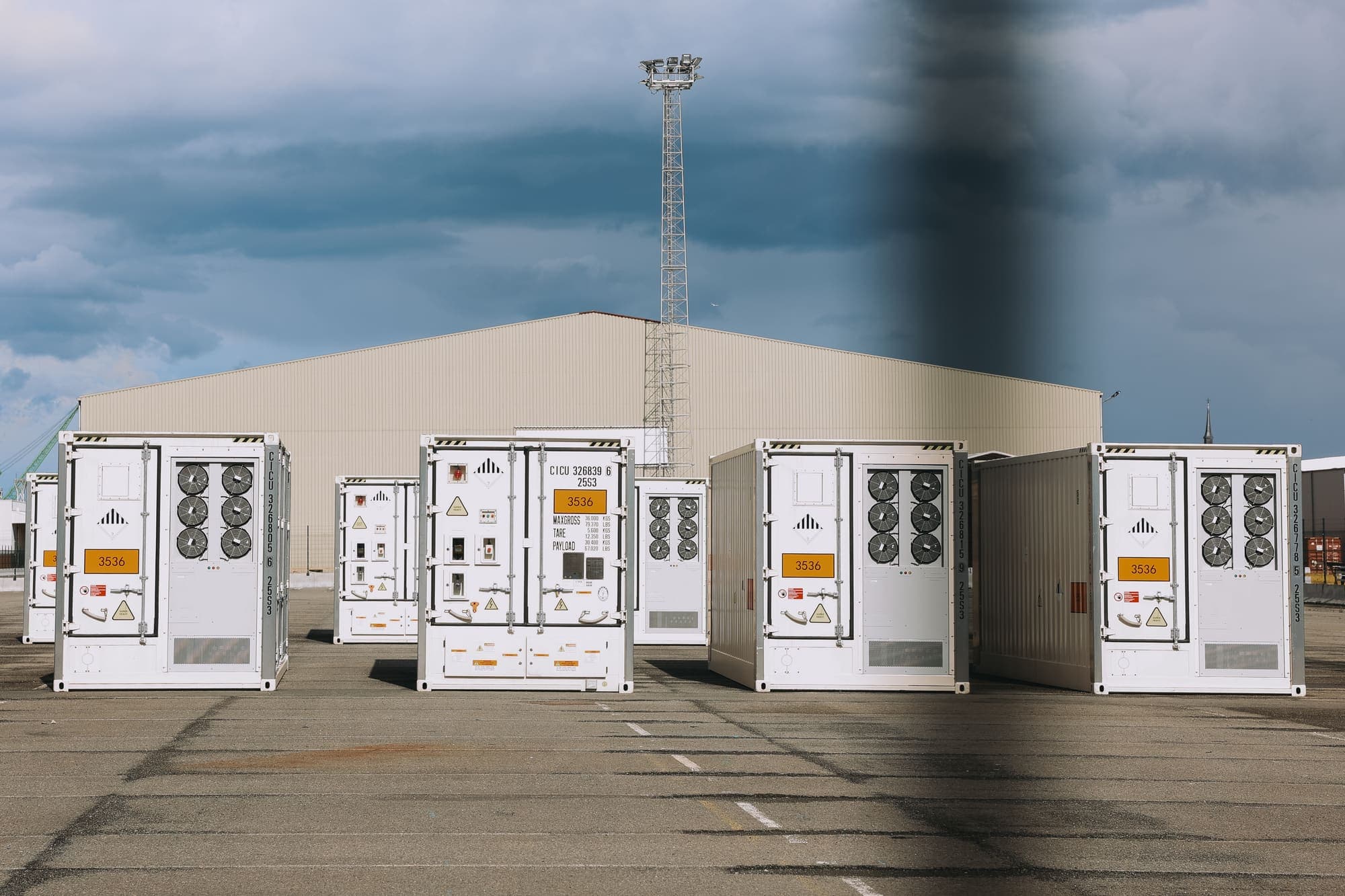
BESS logistics training for freight forwarders. UN 3536 classification, shipping line restrictions, ADR permits, and market opportunities across 6 European markets and beyond. Live online, 3 September 2026.

NEWS

European BESS Market: Where the Freight Is Going

Rabobank's 2025 research across six European markets confirms what forwarders on the ground already feel: the UK, Germany, and Italy are the most attractive markets for battery energy storage investment. The UK leads with 5.3 GW installed and 200 GW of standalone BESS sitting in the grid connection queue. Germany expects a sixfold increase to 23–27 GW by 2030. Italy's MACSE mechanism offers developers 15-year contracts — bankable demand with known delivery timelines. Spain, the Netherlands, and France follow closely, each with distinct logistics profiles. Every gigawatt deployed means hundreds of BESS containers moving through European ports. Forwarders who understand which markets are accelerating — and why — will position themselves ahead of the freight flows, not behind them.

UN Numbers You Need to Know

The IMO's CCC 11 Sub-Committee has finalised Amendment 43-26 to the IMDG Code, introducing new UN numbers that will reshape how BESS cargo is classified at sea. UN 3558 creates the first dedicated classification for damaged, defective, or end-of-life battery storage systems in cargo transport units — the regulatory foundation for circular economy logistics. UN 3564 covers sodium-ion batteries in transport units, ahead of CATL's first Na-ion BESS exports from China in 2027. Meanwhile, CCC 11 data shows a 16.98% non-compliance rate across 24,558 dangerous goods containers inspected globally. Nearly one in six had deficiencies. The message is clear: BESS classification is getting more complex, not simpler. Forwarders who master the difference between UN 3536, UN 3558, and UN 3564 before these rules take effect will have a compliance advantage that translates directly into commercial trust.

Why this matters now

Battery logistics is rapidly scaling and becoming increasingly complex, particularly in the context of the energy transition, data centers, and electrification. As shipping regulations tighten, shipping lines are starting to impose restrictions on battery cargo. This makes it crucial for forwarders with the right expertise in battery logistics to navigate these challenges and secure this vital business.

4.8/ ★★★★★

Session 1 and 2 rated by logistics professionals

What you will learn

  • How the battery logistics supply chain really works
  • Understanding the shipping regulations that can block or enable your shipments
  • Why shipping lines increasingly say no amidst the energy transition
  • Storage, safety & insurance realities in the battery logistics sector
  • Where the real business opportunities lie (EU & Africa)

More information

Who should attend

Price €350 per person (excl VAT)

Who should attend

Operations Managers, Commercial Directors, Import and Export Managers and C-level executives from freight forwarding companies who want to understand the current and future opportunities. 

Format

Price €350 per person (excl VAT)

Who should attend

📅 September 3, 2026 · 9h00–12h00 CET Join us for a 3-hour live session focused on battery logistics and the energy transition, particularly in relation to shipping regulations. Speaker : Ms Hilde Lenaerts of LAGOMax

in co-production with Portilog.

🌍 This interactive format will have limited seats, ensuring an engaging experience for all participants. 


Price €350 per person (excl VAT)

Price €350 per person (excl VAT)

Price €350 per person (excl VAT)

"Limited seats available for Edition 3 on September 3, 2026. Register early — previous editions sold out. Designed for freight forwarders navigating battery cargo regulations and the energy transition."

Secure your seat now

This is not just about battery logistics; it’s about strategically positioning your company in the energy transition while effectively navigating the complex shipping regulations.

Read our introduction to BESS logistics

Read our blogpost

Frequently Asked Questions

For more detailed information, contact us. The information in this FAQ is not binding. 

UN 3536 is the IMDG Code classification for lithium batteries installed in a cargo transport unit — which is exactly what a utility-scale BESS container is. It carries specific special provisions (including SP 389, which governs how batteries must be secured inside the unit) that differ significantly from UN 3480 (loose lithium-ion batteries) and UN 3481 (batteries packed with equipment). Many shippers still declare BESS cargo under the wrong UN number, which can result in booking refusals, port holds, or insurance complications. Getting the classification right is the first step in any BESS shipment — and the most common point of failure.


No. Some major carriers refuse BESS cargo entirely. Sungrow's own transport manual confirms that COSCO and CMA CGM do not accept their PowerTitan BESS units. Other lines accept BESS but impose strict conditions on state of charge, stowage position, and documentation. The acceptance landscape is fragmented and changes regularly, which is why forwarders need to verify carrier acceptance for each specific OEM product before booking — not assume that last month's acceptance still holds


The IMO's CCC 11 Sub-Committee has finalised Amendment 43-26 introducing several new classifications. The two most important for BESS logistics are UN 3558 (lithium batteries in a cargo transport unit that are damaged, defective, or destined for disposal or recycling) and UN 3564 (sodium-ion batteries in a cargo transport unit). UN 3558 creates the first dedicated classification for end-of-life BESS — essential as recycling and second-life flows increase.


Copyright © 2026 LOXYGEN BV  - All rights reserved

  • Terms and Conditions
  • Investors
  • Share your expertise
  • Help
  • DPA
  • About us
  • Contactform

This website uses cookies.

We use cookies to analyze website traffic and optimize your website experience. By accepting our use of cookies, your data will be aggregated with all other user data.

Accept