Learning · 3 September 2026
A High‑Growth Market Where Freight Forwarders Can Create Value
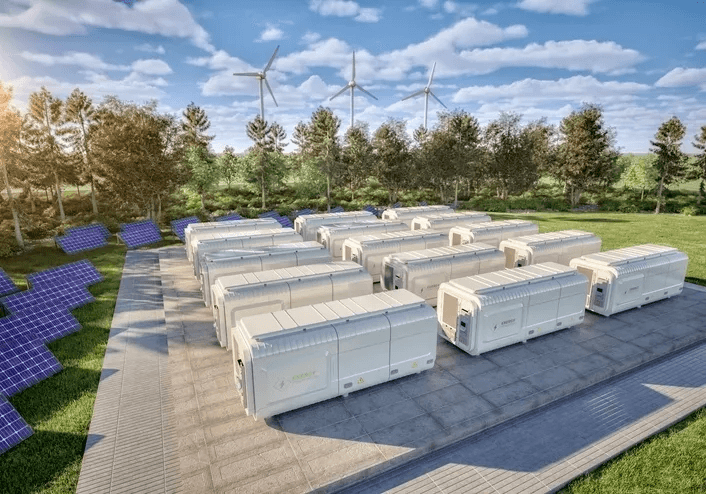
Battery Energy Storage Systems (BESS) are moving rapidly from niche technology to core infrastructure for the global energy transition. What was once a specialised energy topic is now becoming a mainstream global supply chain, moving through ports, terminals and project corridors worldwide.
The market growth is significant. The global BESS market was valued at around USD 30+ billion in 2025 and is expected to grow at 15–20% per year, reaching well over USD 100 billion within the next decade. This growth is driven by grid reinforcement, renewable energy integration, electrification of ports and industry, and the rapid expansion of data centres and energy‑intensive facilities.
For freight forwarders, this is not just a volume story. It is a value story.
Why logistics is suddenly a key cost driver
As BESS projects scale, one reality is becoming very clear to developers, EPCs and investors: the equipment itself is no longer the only cost focus.
Industry cost breakdowns show that non‑hardware costs – including logistics, transport, handling, customs, installation coordination and permitting – can account for roughly 25% to 35% of the total BESS project budget.
As battery hardware prices continue to fall, these “soft costs” now represent a major lever to improve project economics. This is exactly where logistics decisions matter most: how equipment is routed, how often it is handled, how long it sits in ports or yards, and how smoothly it moves from factory to final site.
At that point, the freight forwarder is no longer just executing transport – they are influencing the financial outcome of the project.
EU and Africa trade lanes: where expertise pays off
Across Europe, BESS deployments are accelerating in grid upgrades, port electrification and industrial clusters. These flows are rarely one‑off shipments. They are programmes, often with repetition, scale and long‑term partnerships.
On Africa trade lanes, BESS is increasingly linked to energy reliability, mining and infrastructure development. Here, logistics costs typically weigh even heavier on project viability due to longer inland legs, fewer routing alternatives and higher sensitivity to delays.
For forwarders with experience on EU and Africa corridors, BESS is a natural extension of project logistics – but with higher strategic relevance and longer client lifecycles.
More than project cargo alone
BESS is not a single cargo category. It connects multiple business lines: finished systems shipped from Asia, project deployments into Europe and Africa, industrial supply chains linked to energy infrastructure, and increasingly reverse logistics for upgrades, replacements and lifecycle flows – especially relevant for data centres and large power users.
Forwarders who build capability today are not preparing for one shipment, but for a growing logistics ecosystem.
Why this matters for your growth strategy
BESS combines:
strong, structural market growth high logistics intensity and a tangible contribution to the energy transition
Few cargo segments offer all three at the same time.
Forwarders who invest in the right skills are not competing on price alone. They are becoming trusted partners who reduce cost, complexity and risk for their clients.