AI · 11 August 2026
While Trucks Slow Down, the Energy Transition Cannot
Across Europe, something quite striking is happening: trucks are slowing down—not because of congestion or inefficiency, but simply because of rising energy prices.
From the closure of the Strait of Hormuz to ongoing instability in the global oil system, energy is once again at the center of geopolitics, and logistics is among the first to feel the impact—at the pump, in increasing costs and freight rates, and ultimately in shrinking margins.
Slowing down therefore seems like a rational response.
But it raises a fundamental question:
should we really be slowing down the energy transition?
A market misunderstanding
There is a growing perception that the energy transition is slowing down—that urgency is fading and that geopolitical pressure is pushing us back toward traditional energy models.
But this is not what is happening.
What we are experiencing is not a slowdown, but a stress test.
And in that stress test, one conclusion becomes clear:
the need to transition is increasing, not decreasing.
What we see on the ground
Over the past months, this has become very tangible.
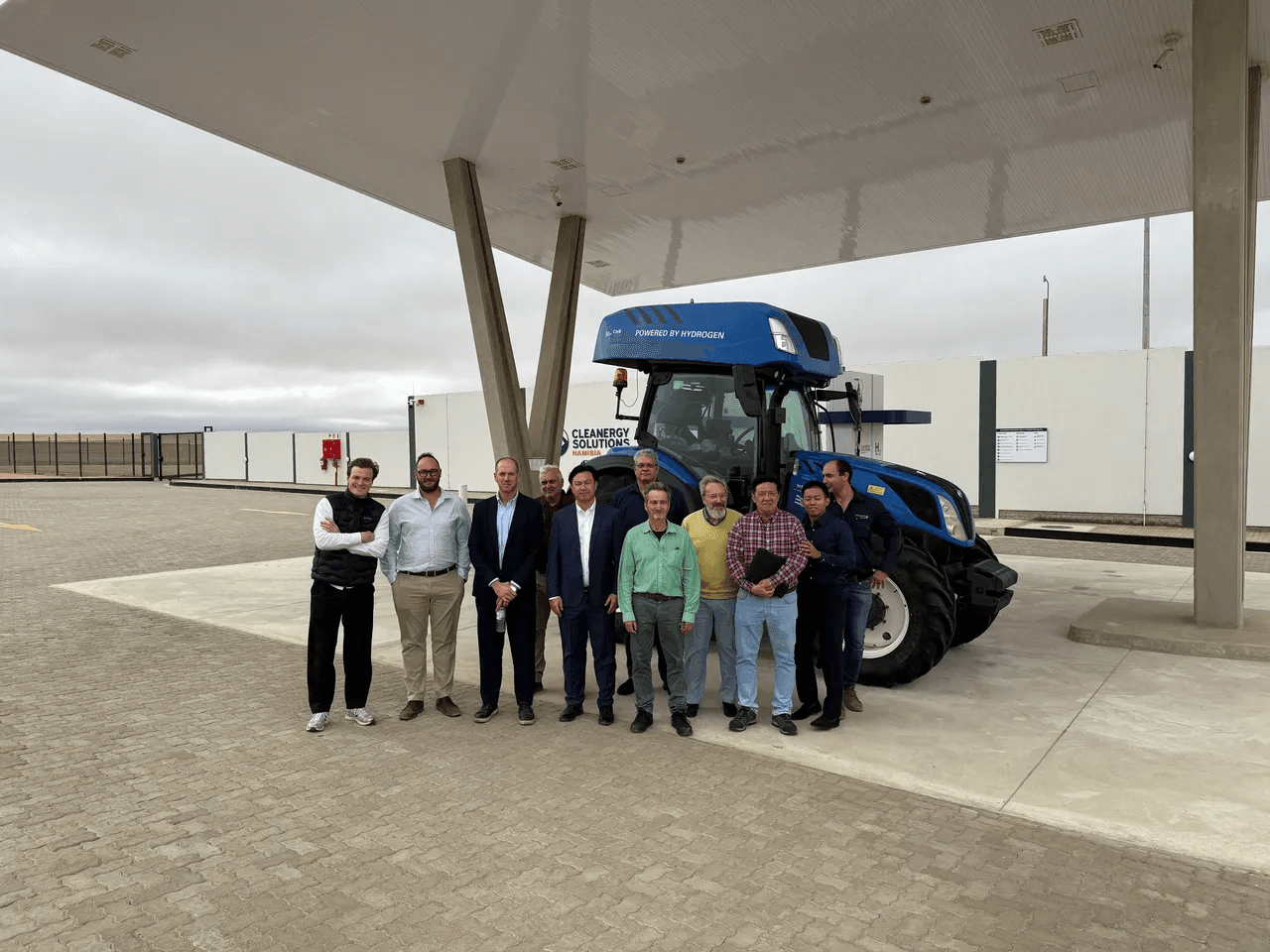
During our Africa Roadtrip, countries such as Namibia are positioning themselves as future exporters of hydrogen, supported by corridor development and infrastructure investments already taking shape today.
Back in Europe, during our Port Immersion Week, ports are evolving into energy platforms, investing in hydrogen, CO₂ infrastructure and storage, while becoming increasingly dependent on data, visibility and coordination.
The shift is not theoretical.
It is operational.
The market is already moving
Our course on battery logistics is fully booked.
Not because it is an interesting topic—but because forwarders are already dealing with it: compliance, complexity, risk, and opportunity.
It signals something important:
this is where future logistics business is emerging.
A moment to evolve
Forwarders today are busier than ever—and rightly so.
They operate at the heart of global trade, solving problems, supporting customers and keeping supply chains running under pressure.
At the same time, the environment is becoming more complex: more data, more regulation, more expectations.
This creates an important moment—not to slow down, but to evolve.
To structure processes. To leverage digital tools and data flows. To build expertise in new cargo segments. And to explore emerging markets and corridors.
Because ultimately,
the real shift is in how forwarders position themselves for what comes next.
New flows, new positioning
The energy transition in logistics is redefining what moves, where it moves, and who can handle it.
Hydrogen, batteries and renewable infrastructure require new levels of expertise, compliance and trust.
Which means one thing:
participation in these supply chains will not be automatic.
The real risk: disconnection
The biggest risk is not disruption.
It is disconnection.
If you are not involved early, not building capabilities and not connected to the right ecosystems, you risk being outside the system when it matters most.
And once these supply chains are structured, they rarely reopen.
A clear choice
Yes, trucks are slowing down.
But your strategy should not.
Because while some respond to short-term pressure, others are already repositioning themselves—entering new corridors, building partnerships and developing capabilities.
Make sure you are part of the others who are repositioning themselves.
Loxygen perspective
At Loxygen, we work where this transition is happening—on the ground in Africa, inside European ports, and alongside forwarders preparing for what comes next.
Not to describe the future.
But to make sure you are part of it.
Final thought
Trucks may slow down.
The energy transition cannot.
And neither should you.